In today's competitive Canadian real estate market, a well-written listing description is your most powerful marketing tool. Yet, even seasoned realtors often fall into common traps that cost them clicks, showings, and ultimately, sales. Whether you're selling a downtown Toronto condo or a peaceful cottage in Muskoka, your property's story matters—and the way you tell it can make or break its appeal.
This comprehensive guide exposes the most frequent listing description mistakes real estate agents make across Canada—from subtle human rights violations to the classic "colour" vs. "color" debate—and how to fix them.
Critical Insight
Part 1: Compliance & Legal Landmines
These are the mistakes that can lead to ethics complaints or fines. Canadian Human Rights laws are strict, and terms that seem harmless can be discriminatory.
- Using Exclusionary Language
Avoid describing the "ideal buyer." It violates human rights codes to imply a preference based on family status, age, or ability.
- Bad: "Perfect for a young professional couple" or "Great family-oriented neighbourhood."
- Why It's Problematic: This excludes singles, seniors, and non-traditional families.
- The Fix: Describe the property, not the person. Use "Close to schools and parks" instead of "family-oriented."
"Watch Out: "Walking distance" is considered ableist in some jurisdictions. Use "700 metres to the SkyTrain" or "Close proximity to transit" instead."
- Violating CREA or Fair Housing Advertising Rules
Canadian realtors must follow the Canadian Real Estate Association (CREA) guidelines and provincial regulations, including fair housing and advertising standards. Some agents inadvertently include phrasing that could raise compliance issues.
- Avoid: References like "perfect for young couples" or "ideal for families with kids."
- Avoid: Implied exclusions such as "adults only neighborhood" or "quiet, mature building."
- Keep the focus: On the property features—not the type of buyer you think should live there.
- Misrepresenting "As Is" Sales
Many agents believe writing "Sold as is" protects the seller from all liability.
The Reality
- Ignoring Bilingual Requirements (Region Specific)
In bilingual regions like Quebec, Ottawa, New Brunswick, or parts of Montreal, posting a description only in English (or using a bad auto-translate for the French version) alienates a massive chunk of your market and can look unprofessional.
- Best Practice: Provide at least a short version of your description in both official languages.
- Pro Tip: Use translation tools reviewed by native speakers, not raw machine translation.
- Impact: Bilingual listings can dramatically improve reach and demonstrate inclusivity.
Part 2: The "Canadian vs. American" Spelling Struggle
Canada sits in a unique linguistic middle ground. While we consume American media, our official spelling is closer to British English.
- Inconsistency is the Killer
The biggest mistake isn't necessarily using one or the other, but mixing them in the same paragraph.
- Canadian/British: Colour, Neighbourhood, Centre, Metre, Harbour, Favourite, Honour
- American: Color, Neighborhood, Center, Meter, Harbor, Favorite, Honor
- The Rule: Stick to Canadian spelling for professionalism unless your specific board or brand guidelines dictate otherwise.
"Nothing looks sloppier than writing "The center of the neighbourhood" or "This harbor-front property is my favorite." Pick one system and stay consistent."
- Metric vs. Imperial Mash-up
Canadian real estate weirdly mixes both systems. We sell houses in Square Feet but land in Acres or Hectares, and room dimensions often appear in Metres on floor plans.
- Common Mistake: Listing room sizes in metres in the text when your audience thinks in feet.
- The Fix: Know your local market's preference (usually feet for interior, metres for legal/survey descriptions).
- Consistency: If your MLS data shows square footage, don't suddenly switch to square metres in the description.
Part 3: The "Lazy Agent" Writing Habits
These mistakes won't get you fined, but they will make buyers scroll past your listing without a second thought.
- Overusing Generic Phrases
Phrases like "must see," "won't last long," or "move-in ready" are fillers that don't actually describe the property. They may sound fine at first glance, but buyers have seen them thousands of times before. These overused clichés blend your listing into the background instead of making it stand out.
- Weak: "Wonderful family home."
- Strong: "Spacious 4-bedroom home featuring a newly renovated kitchen with quartz countertops and an oversized backyard, perfect for summer barbecues."
- Why It Works: Adding details grounded in visual and emotional clarity helps readers imagine living there.
- The "Data Dump"
One of the most common mistakes is simply repeating what's already visible in the MLS sidebar.
- Mistake: "3 bed, 2 bath, 2000 sq ft, gas heat."
- Why it fails: The buyer can already see these fields in the data section. Don't waste your limited character count repeating data.
- The Fix: Tell the story the data doesn't show. "Sun-drenched south-facing windows" is better than "South facing."
- Using "Realtor Code" (The Jargon Trap)
Buyers are savvy. They know what these "polite" words actually mean, and they signal that the home has problems.
- "Cozy" = Small/Cramped
- "Handyman Special" / "TLC" = Money pit / uninhabitable
- "Retro" / "Vintage" = Needs a full gut renovation
- "Motivated Seller" = Desperate (this hurts your negotiating power)
- "Charming" = Old and needs work
- "Well-loved" = Worn out
"Be honest but strategic. Instead of "cozy," try "efficiently designed" or "intimate layout." Transparency builds trust, but framing matters."
- The Wall of Text
Writing a 500-word block paragraph with no breaks is a guaranteed way to lose reader attention.
- The Problem: Dense text is difficult to scan, especially on mobile devices.
- The Fix: Use formatting tools your board allows. If you can't use bullet points, use capital letters to break up sections (e.g., "KITCHEN FEATURES include...").
- Best Practice: Keep paragraphs to 2-3 sentences maximum. Use line breaks generously.
Part 4: Strategic Marketing Mistakes
- Ignoring the Target Audience
Not every property appeals to every buyer. A condo near the University of British Columbia will attract different prospects than a 4-bedroom detached home in Brampton.
- Common Mistake: Writing one-size-fits-all descriptions that ignore who the property is truly for.
- How to Fix It: Write with a specific buyer persona in mind—young professionals, families, retirees, investors, etc.
- Families: May care about school proximity, safety, and yard space.
- Young professionals: Might prefer transit access, modern kitchens, and walkability.
- Retirees: Might value community amenities, single-level living, and low-maintenance spaces.
"Every word should speak to their aspirations. Tailor your language to the lifestyle your ideal buyer wants to live."
- Writing Without Local SEO in Mind
Even the most elegant listing description loses power if no one finds it online. Including keywords naturally helps your listing appear in local searches.
- Common Oversight: Neglecting to include searchable location terms.
- The Fix: Include neighborhood names, local landmarks, and property types naturally.
- Example: "Modern 2-bedroom condo in Vancouver's Olympic Village with water views and access to False Creek walking trails."
SEO Benefit
- Focusing on Features Instead of Benefits
Features describe what a property has; benefits explain why those features matter. Buyers respond more to emotional triggers than mere specs.
- Feature: "Central air conditioning."
- Benefit: "Stay cool and comfortable year-round with efficient central air."
- Feature: "Double car garage."
- Benefit: "Protect your vehicles from harsh Canadian winters in the spacious double garage."
- Feature: "Open concept kitchen."
- Benefit: "Entertain effortlessly with an open-concept kitchen that keeps you connected to family and guests."
"Transform basic features into lifestyle statements. You're not selling square footage—you're selling a feeling."
- Poor Grammar, Spelling, and Flow
Even small typos can make a listing appear unprofessional. Real estate descriptions filled with errors or awkward phrasing often cause buyers to lose trust before they even view the property.
- Double-check spelling: Especially for street names, neighborhood names, and amenities.
- Read it aloud: Ensure it flows naturally and sounds conversational.
- Use tools: Leverage formatting tools or AI writing assistants to polish the language.
- Remember: Your description may also appear in brochures or feature sheets; consistency and clarity are crucial.
- Forgetting to Paint a Visual Story
Many listings read like inventory lists—sterile and transactional. But buyers respond emotionally when they can see themselves in the home.
- Weak: "Three bedrooms, finished basement, double garage."
- Strong: "Three bright bedrooms offer room for family or guests, while the finished basement makes an inviting recreation space for movie nights and gatherings. The double garage provides protected parking and extra storage for seasonal gear."
Pro Tip
- Neglecting the Opening Line
Your first sentence makes or breaks engagement. On most real estate platforms, only the first few words appear before the "Read more" cutoff—so they must hook attention.
- Avoid: "Welcome to 123 Main Street."
- Try: "Step into a sun-filled Toronto home where classic charm meets modern upgrades."
- Or: "Discover urban luxury in this stunning Vancouver penthouse with panoramic mountain views."
"That opening line should invite curiosity and entice clicks. It's your hook—make it count."
- Skipping the Call to Action
Your description should guide the next step—not just inform. Great CTAs (calls to action) tell readers what to do next.
- "Book your private showing today"
- "Explore the full virtual tour before it's gone"
- "Contact us to schedule your personalized walkthrough"
- "Don't miss this rare opportunity—inquire now"
Without this, your listing ends abruptly and loses conversion potential. Always include a clear next step.
Quick Reference: The Complete Checklist
Before you publish your next listing description, run through this comprehensive checklist:
- 1Compliance Check: No exclusionary language or buyer preferences mentioned
- 2Spelling Consistency: All Canadian spelling (colour, neighbourhood, centre)
- 3No Generic Phrases: Replaced "must see" and "won't last" with specific details
- 4Target Audience: Written for the specific buyer persona
- 5Local SEO: Includes neighborhood name and local landmarks
- 6Benefits Over Features: Explains WHY features matter
- 7Grammar Check: Proofread and flows naturally
- 8Visual Story: Uses sensory language and emotion
- 9Strong Opening: First sentence hooks attention
- 10Clear CTA: Tells reader what to do next
- 11Proper Formatting: Short paragraphs, easy to scan
- 12No Realtor Code: Honest language without euphemisms
The Bottom Line: Quality Descriptions Drive Results
Writing persuasive, compliant, and SEO-friendly listing descriptions isn't easy—especially when juggling dozens of listings at once. The difference between a mediocre description and a great one can be thousands of dollars in final sale price, days on market, and the number of qualified showings you receive.
The agents who consistently win listings are the ones who understand that every word matters. They know that a listing description is not just a formality—it's a marketing asset that works 24/7 to attract, educate, and convert potential buyers.
Remember
Save Time and Stay Consistent with AI Tools
The reality is that creating persuasive, compliant, and SEO-optimized listing descriptions takes time and expertise. Many top-performing Canadian realtors are now turning to AI-powered tools to streamline this process while maintaining quality and consistency.
How AI Listing Description Tools Help:
- Suggest better phrasing: Based on property data and market trends
- Automatically include local keywords: For improved SEO and discoverability
- Check grammar and tone: Ensure professional, polished copy every time
- Maintain consistent brand voice: Across all your listings
- Ensure compliance: Flag potentially problematic language before you publish
- Generate multiple variations: Test different approaches to see what resonates
"If you want to save time and create polished, conversion-ready copy, try our AI-Powered Listing Description Generator—designed specifically for Canadian realtors. It understands local market nuances and helps you craft descriptions that sell—without the hassle of starting from scratch."
Ready to elevate your listing descriptions? Start creating compelling, compliant, and conversion-focused property descriptions that stand out in the Canadian market. Your next great sale starts with great copy. Explore more real estate tips on our blog.
The Hidden Cost of "Old School" Websites
Maintaining a custom real estate website is notoriously expensive and time-consuming. You are often paying developers thousands of dollars upfront, plus monthly retainer fees, just to keep the lights on.
The Trap
This is where RealtyChat changes the game. It solves these headaches by letting agents manage their own listings instantly without writing a single line of code.
"RealtyChat gives you a personalized, AI-powered link to share with buyers—eliminating the need for expensive hosting while delivering features that actually convert."
1. The "Master Link" (Link-in-Bio)
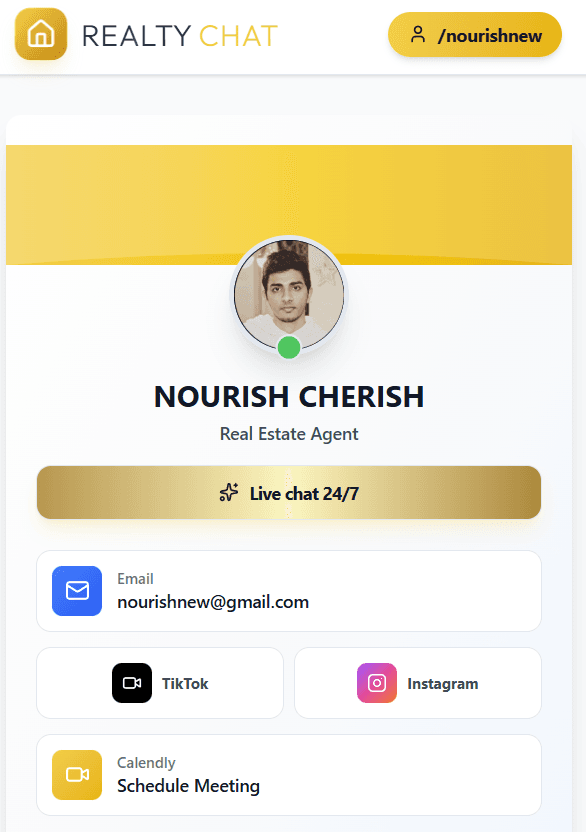
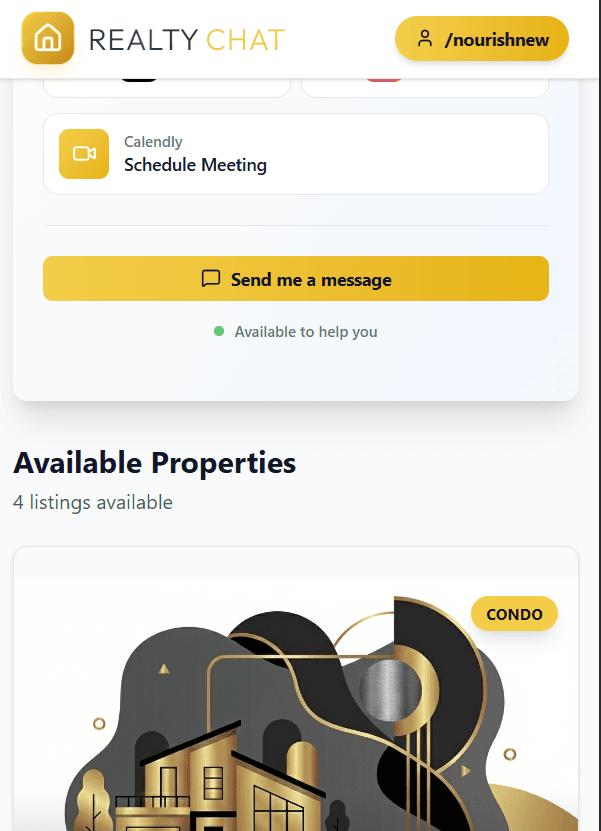
Replace your fragmented social presence with one elegant Master Link. It hosts all your listings, your "Contact Agent" button, Calendly booking link, and direct icons for TikTok, Instagram, and Facebook. It's the only link you'll ever need in your bio.
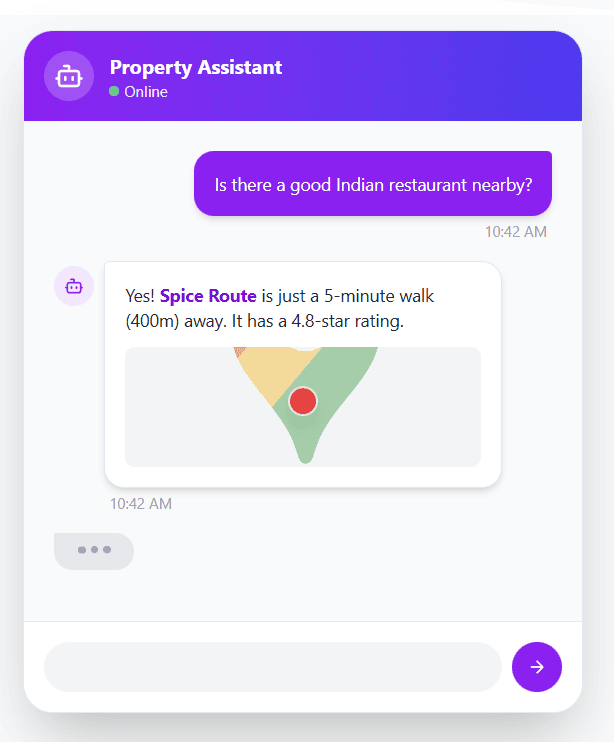
2. AI Listing Assistant (The Location Expert)
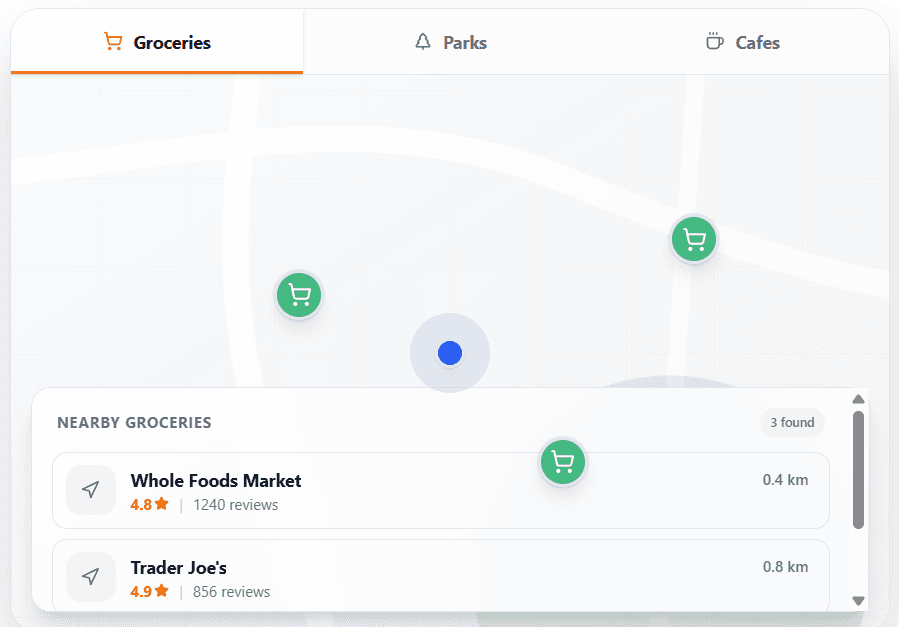
Every individual listing comes with a dedicated Location Expert AI. Powered by Google Maps and Gemini, it uses the property address to answer hyper-local questions with surgical precision. Buyers can ask "Where are the nearest Asian restaurants?", "How far is the gym?", or about local schools, getting accurate, real-world data instantly.
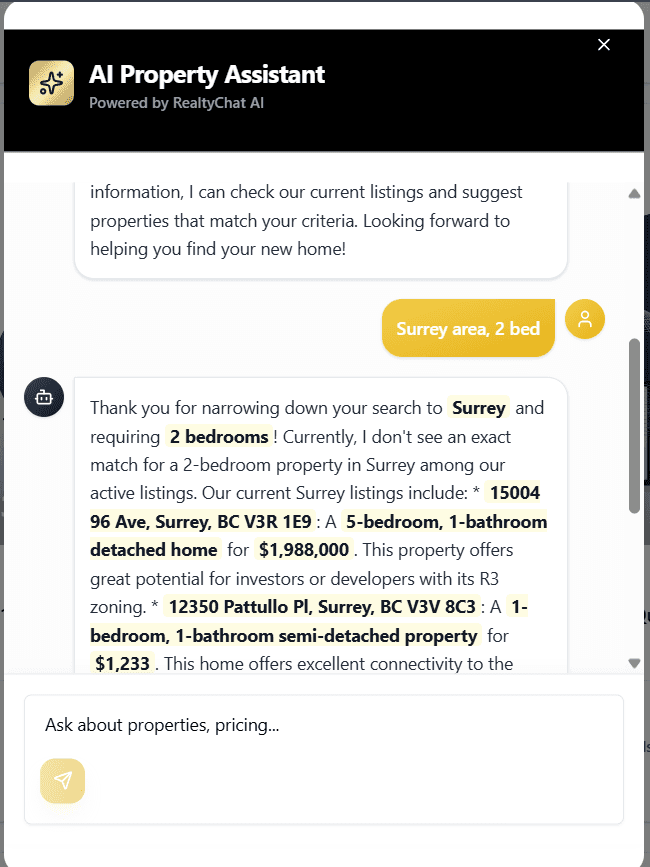
3. Lead AI Chatbot (Your Digital Twin)
Located on your Master Link-in-Bio, this chatbot acts as your digital twin. You can configure it with your own knowledge base (PDFs, text files) to represent your brand 24/7. It greets visitors, collects lead requirements automatically, and proactively recommends listings from your entire portfolio that match their needs.
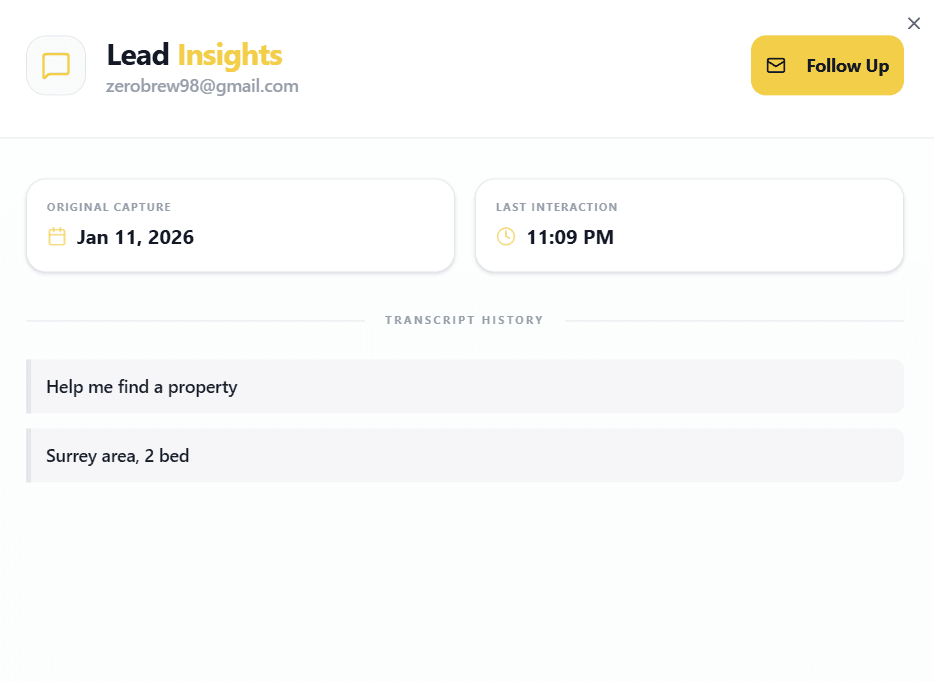
4. AI Leads Dashboard
Stop guessing who is visiting your links. Your AI Leads Page gives you a real-time view of every lead captured by your Link-in-Bio chatbot. View their email, property requirements, and the full conversation history so you can step in when they're ready to talk.
5. Neighborhood & Lifestyle Intelligence
Our platform leverages Google's Gemini AI combined with Google Maps data to create rich, location-aware listing descriptions, automatic commute analysis, and interactive lifestyle maps for every listing.
Instant Neighborhood Analysis:
- ✓Commute Analysis: Instant drive vs. transit times to major work hubs.
- ✓Lifestyle Maps: Auto-populated maps with nearby grocery stores, parks, and schools.
- ✓AI Descriptions: Compelling narratives with precise walking distances to local cafes and gyms.
Start Now
Ready to Upgrade Your Real Estate Business?
Join thousands of agents who are saving time and closing more deals with RealtyChat's AI-powered tools and beautiful link-in-bio listings.
Subscribe to our newsletter
Get the latest real estate market analysis and trends delivered straight to your inbox.