The Canadian real estate market has been a topic of intense discussion for over a decade. From Vancouver's glass towers to Toronto's sprawling suburbs, prices have seen a trajectory that often defies gravity. But what are the underlying forces driving this phenomenon? The answer is not simple—it's a complex interplay of economic policy, demographic shifts, geographic constraints, cultural attitudes toward homeownership, and systemic failures in housing supply that have accumulated over more than a generation. Understanding why Canadian house prices remain stubbornly high requires examining not just recent events like the COVID-19 pandemic or interest rate changes, but the deep structural issues that have been building since the early 2000s. This is not merely an economic story; it's a story about how Canada has fundamentally approached housing policy, urban planning, immigration, and the financialization of what was once considered primarily shelter. Let's explore the key factors that have created one of the least affordable housing markets in the developed world.
Key Takeaway
- The Supply vs. Demand Imbalance: A Structural Deficit Decades in the Making
At its core, the high cost of housing in Canada is a classic economic story of supply and demand, but the simple math only begins to explain the severity of the price ascension we've witnessed. Canada has one of the fastest-growing populations in the G7, driven largely by aggressive immigration targets that have brought hundreds of thousands of new permanent residents annually, plus temporary residents including international students and foreign workers. While this population growth has been economically beneficial in many ways—filling labour shortages, supporting tax revenues, and driving consumer spending—it has placed immense and sustained pressure on housing stock that was already insufficient. The Canada Mortgage and Housing Corporation (CMHC) estimates that Canada needs to build an additional 3.5 million housing units by 2030 beyond what would normally be constructed just to restore affordability to historical norms. Currently, Canada builds roughly 200,000 to 250,000 units per year, a rate that barely covers natural replacement of aging housing stock and baseline population growth, let alone addresses the accumulated deficit. This means that every year, the gap between housing need and housing supply widens further, creating a cumulative shortage that pushes prices higher. The problem is particularly acute in major urban centers like Toronto, Vancouver, Montreal, and Calgary, where the vast majority of new immigrants settle and where job opportunities are concentrated. These cities have seen population growth rates that would require doubling or tripling housing construction to keep pace, yet zoning restrictions, labour shortages, high development costs, and slow approval processes have prevented supply from responding to demand. The result is a market where buyers compete fiercely for limited inventory, driving prices to levels that bear little relationship to local incomes or the fundamental cost of construction.
Why Housing Starts Have Lagged Behind Population Growth
The failure to build enough housing is not due to lack of demand or profitability—developers would gladly build more if they could. Instead, it's the result of multiple systemic barriers that have accumulated over decades. First, restrictive zoning laws in Canadian cities have made it illegal to build anything other than detached single-family homes on the vast majority of residential land. In Toronto, approximately 70% of residential land was zoned exclusively for detached homes as of 2020, meaning that even as the population surged, most of the city could not legally increase density. Vancouver faces similar constraints, with mountains, ocean, and the Agricultural Land Reserve limiting geographic expansion, while zoning prevents densification in existing neighborhoods. This creates what urbanists call the 'missing middle'—the lack of townhomes, triplexes, low-rise apartments, and other medium-density housing that could accommodate more people without requiring high-rise towers. Second, the approval process for new housing developments in Canada is notoriously slow and unpredictable. A typical project in Toronto or Vancouver can take 3-7 years from initial proposal to construction start, during which developers must navigate multiple rounds of community consultations, environmental assessments, heritage reviews, traffic studies, shadow studies, and approvals from municipal councils and sometimes provincial authorities. Each layer of review adds time and cost, and the uncertainty makes financing more expensive and risky. Third, Canada faces a severe shortage of skilled construction workers—electricians, plumbers, framers, and other trades—with many experienced workers approaching retirement and insufficient young people entering the trades to replace them. Even when projects are approved, labour shortages delay construction and drive up costs. Fourth, the cost of building new housing has increased dramatically due to rising land prices (which have increased 200-300% in major cities over the past decade), soaring development charges imposed by municipalities (which can exceed $100,000 per unit in some Greater Toronto Area municipalities), volatile material costs (lumber prices spiked 300% during COVID), and increased financing costs as interest rates rose. These high costs create a 'floor' price below which new housing simply cannot be built profitably, meaning that even if all regulatory barriers were removed tomorrow, new construction would still be expensive and would take years to meaningfully increase supply.
- Booming Population: Canada welcomed approximately 3.5 million new permanent residents from 2015-2025, plus hundreds of thousands of temporary residents, with most settling in just a handful of cities
- Lagging Starts: Housing construction has averaged 200,000-250,000 units annually, far below the 400,000-500,000 needed to keep pace with population growth and address the accumulated deficit
- Zoning Restrictions: Over 70% of residential land in Toronto and Vancouver is zoned exclusively for detached homes, preventing densification
- Slow Approvals: Development projects take 3-7 years from proposal to construction start due to multiple layers of review and approval
- Labour Shortages: Canada needs approximately 300,000 additional skilled trades workers to meet housing construction targets
- High Development Costs: Land costs, development charges, material costs, and labour costs have all increased dramatically, creating a high floor price for new construction
- The Lingering Effect of Cheap Money: How Low Interest Rates Fueled a Decade-Long Price Surge
For more than a decade following the 2008 global financial crisis, Canada maintained historically low interest rates as the Bank of Canada sought to stimulate economic growth and prevent deflation. The policy rate fell to near-zero levels and remained there for years, with mortgage rates following suit. Five-year fixed mortgage rates, which had historically averaged 5-7%, fell below 3% and eventually dropped below 2% during the COVID-19 pandemic, reaching levels never before seen in Canadian history. Variable rates fell even lower, with some borrowers securing rates below 1.5%. This cheap money had a profound and lasting effect on housing prices because it dramatically increased how much buyers could afford to borrow. When mortgage rates fall from 5% to 2.5%, a buyer's monthly payment on a $500,000 mortgage drops from approximately $2,900 to $1,975—a savings of nearly $1,000 per month. This extra borrowing capacity doesn't just make housing more affordable; it allows buyers to bid significantly more for the same property. If everyone in the market suddenly has 30-40% more borrowing power, prices rise to match that new ceiling. This is exactly what happened throughout the 2010s and accelerated dramatically during COVID when rates hit rock bottom. The psychological impact was equally important: as prices rose year after year, Canadians came to believe that 'real estate only goes up,' creating a self-fulfilling prophecy where fear of missing out (FOMO) drove people to stretch their finances to enter the market before being priced out forever. Even as interest rates have normalized since 2022—with the Bank of Canada raising rates from 0.25% to 5.0% in one of the fastest hiking cycles in history—the psychological baseline for prices remains high. Buyers and sellers alike remember the peak prices of 2021-2022 and are reluctant to accept significantly lower values, creating what economists call 'sticky' prices that resist downward adjustment. Moreover, many homeowners locked in ultra-low mortgage rates before rates rose, giving them no financial incentive to sell and reducing inventory further. The result is a market where prices have softened somewhat from peak levels but remain historically elevated and disconnected from local incomes, with affordability actually worsening in many cases because even though prices are lower, the monthly cost of carrying a mortgage at 5-6% is higher than it was at peak prices with 2% rates.
"Cheap money fueled a buying frenzy that disconnected prices from local incomes, creating a gap that remains difficult to bridge. Even as rates have normalized, the psychological baseline for prices remains high, and pent-up demand continues to support the market floor."
The Interest Rate Effect
- Urbanization, Geographic Constraints, and The "Missing Middle": Why Canadian Cities Can't Build Their Way Out
Canada is the second-largest country in the world by land area, yet its population is highly concentrated in a few key urban centers, with the vast majority of Canadians living within 100 kilometers of the U.S. border. This geographic reality creates intense competition for finite land in desirable locations where jobs, services, and amenities are concentrated. Vancouver is hemmed in by the Pacific Ocean to the west, mountains to the north, and the U.S. border to the south, with the Agricultural Land Reserve protecting farmland from development to the east. Toronto faces Lake Ontario to the south and is constrained by the Greenbelt—a protected band of agricultural and environmentally sensitive land—to the north, east, and west. These geographic and policy constraints mean that unlike cities in the American Sunbelt that can sprawl endlessly outward, Canadian cities must densify within relatively fixed boundaries. Yet for decades, municipal zoning policies have prevented exactly this kind of densification. The 'yellow belt' of single-family-only zoning that covers the majority of residential land in Toronto, Vancouver, and other major cities was established in an era when Canada's population was much smaller and growth was slower. These zones prohibit the construction of duplexes, triplexes, townhomes, and low-rise apartments—the 'missing middle' housing types that could accommodate more people without requiring high-rise towers. The result is a binary housing market where families must choose between expensive detached homes in low-density neighborhoods or high-rise condos in dense urban cores, with very little in between. This missing middle is particularly problematic because it's exactly the type of housing that would be most suitable for families with children, yet it's illegal to build in most residential areas. Recent zoning reforms in some cities—such as allowing four-plexes 'as-of-right' without requiring rezoning—are a step in the right direction, but it will take years for this new inventory to be designed, approved, financed, and constructed. Moreover, even when zoning allows for density, community opposition often blocks or delays projects through lengthy appeals and political pressure on municipal councils. NIMBYism (Not In My Backyard) is a powerful force in Canadian cities, with existing homeowners—who benefit from rising prices and have the most to lose from increased supply—often mobilizing to oppose new development in their neighborhoods. This creates a political dynamic where the diffuse interests of future residents and renters are outweighed by the concentrated interests of current homeowners, making it politically difficult for municipal politicians to approve the density increases that would be needed to meaningfully address the housing shortage.
- Yellow Belt Zoning: In major cities like Toronto and Vancouver, extensive single-family zoning prevents the construction of medium-density housing like townhomes, triplexes, and low-rise apartments
- Geographic Limits: Vancouver is hemmed in by mountains, ocean, and the U.S. border; Toronto is bounded by Lake Ontario and the Greenbelt, making land for development finite and expensive
- The Missing Middle: The lack of medium-density housing forces families into a binary choice between expensive detached homes or high-rise condos, with little in between
- NIMBYism: Community opposition from existing homeowners often blocks or delays new development, creating a political barrier to increasing supply
- Slow Reform: Even with recent zoning changes allowing more density, it will take years for new housing to be designed, approved, and constructed
- Investment as a Cultural Norm: The Financialization of Canadian Housing
Real estate in Canada is viewed not just as a place to live, but as a safe, highly leveraged, and lucrative asset class—perhaps the defining investment vehicle for building middle-class wealth. This cultural mindset, which has been reinforced by decades of steadily rising prices and favorable tax treatment, fuels speculative demand that competes with end-user demand and reduces the inventory available for people who simply need a place to live. The principal residence exemption in Canada's tax code allows homeowners to sell their primary residence without paying capital gains tax on the appreciation, creating a powerful incentive to view one's home as a tax-advantaged investment rather than just shelter. For many Canadians, their home represents the largest component of their net worth and their primary vehicle for wealth accumulation and retirement planning. This is not inherently problematic—homeownership has long been a path to financial security—but it becomes problematic when it drives speculative behavior and when policy decisions prioritize protecting home values over ensuring housing affordability for the next generation. Beyond owner-occupied homes, many Canadians own multiple properties as rental investments, reducing the inventory available for first-time buyers. In some condo markets, investors account for 20-30% of purchases, and in pre-construction markets, the percentage can be even higher. These investors are attracted by the combination of rental income, price appreciation, leverage (the ability to control a large asset with a relatively small down payment), and tax advantages (the ability to deduct mortgage interest and other expenses against rental income). The rise of short-term rental platforms like Airbnb has further incentivized investment purchases, with some investors buying properties specifically to operate as short-term rentals rather than long-term housing, further reducing supply. Institutional investors—pension funds, REITs, and private equity firms—have also entered the Canadian residential market in a significant way, particularly in the rental sector, bringing large amounts of capital and professional management but also treating housing purely as a financial asset to be optimized for returns. While foreign investment has received enormous media attention and political focus, particularly in Vancouver and Toronto, most economists agree that domestic speculation and investment have been far more significant drivers of price increases nationally. Studies suggest foreign buyers accounted for approximately 3-5% of purchases nationally, though this percentage was higher in specific luxury markets. Government policies like the foreign buyer tax (15-20% in BC and Ontario) and the federal foreign buyer ban have reduced foreign investment, but prices have remained elevated because the fundamental supply-demand imbalance and domestic investment demand persist. The cultural norm of viewing real estate as the safest and most reliable investment creates a self-reinforcing cycle: as prices rise, more people want to invest in real estate to capture those gains, which drives prices higher, which reinforces the belief that real estate is a can't-lose investment, and so on. Breaking this cycle would require not just increasing supply but also changing the cultural and policy environment that makes real estate such a favored asset class.
- 1Domestic Investors: Many Canadians own multiple properties to build wealth, with investors accounting for 20-30% of purchases in some condo markets, reducing inventory available for first-time buyers
- 2Tax Advantages: The principal residence exemption allows homeowners to sell without paying capital gains tax, creating a powerful incentive to view housing as a tax-advantaged investment
- 3Leverage: Real estate allows investors to control large assets with relatively small down payments, amplifying returns (and risks)
- 4Short-Term Rentals: Platforms like Airbnb have incentivized investment purchases for short-term rental income rather than long-term housing
- 5Institutional Capital: Pension funds, REITs, and private equity firms have entered the residential market, bringing large amounts of capital and treating housing purely as a financial asset
- 6Global Interest: While measures like the foreign buyer ban have been implemented, global capital has historically played a significant role in prime markets, though domestic factors are more important nationally
- The COVID-19 Acceleration: How a Pandemic Supercharged an Already Overheated Market
While all the factors discussed above had been building for years, the COVID-19 pandemic acted as an accelerant that pushed an already expensive market into truly unprecedented territory. During 2020-2022, several extraordinary factors converged simultaneously to create a housing market frenzy unlike anything Canada had seen before. First, interest rates collapsed to historic lows as central banks around the world slashed rates to support economies through lockdowns. The Bank of Canada dropped its policy rate to 0.25% and held it there for nearly two years, while five-year fixed mortgage rates fell below 2% for the first time in Canadian history and variable rates dropped even lower. This gave buyers dramatically more purchasing power overnight—someone who could qualify for a $500,000 mortgage before COVID might suddenly qualify for $700,000 or more, a 40% increase in bidding power that immediately translated into higher prices. Second, government stimulus programs injected massive amounts of money into the economy through programs like CERB (Canada Emergency Response Benefit), wage subsidies, and other support measures, while many Canadians who kept their jobs found themselves saving more than usual due to reduced spending opportunities during lockdowns. Household savings rates spiked to over 25% in 2020 compared to typical rates of 3-5%, representing hundreds of billions of dollars in accumulated savings looking for investment opportunities. Much of this money flowed into housing and other assets, driving prices higher. Third, the shift to remote work fundamentally changed what people wanted in a home and where they were willing to live. Suddenly, commute times mattered less, and people wanted home offices, outdoor space, and more square footage. This drove demand away from downtown condos and toward suburban houses and even rural properties, spreading price increases far beyond traditional hot markets. Towns that had been affordable for decades—places like Barrie, Kingston, London, Kelowna, and cottage country—saw bidding wars and price increases of 30-50% in a single year as urban workers relocated. Fourth, a powerful psychological factor took hold: fear of missing out (FOMO). As prices rose month after month and media coverage highlighted stories of buyers being outbid repeatedly, people became convinced that if they didn't buy immediately, they would be priced out of homeownership forever. This fear drove increasingly irrational behavior—buyers waiving conditions, offering tens of thousands over asking, and making decisions with minimal due diligence. The market became driven more by emotion and speculation than by financial fundamentals. The result was that from early 2020 to early 2022, Canadian home prices increased by 40-50% nationally, with some markets seeing even larger gains. This two-year period saw more price appreciation than the entire previous decade, completely disconnecting prices from incomes and creating an affordability crisis that persists even after prices have cooled somewhat. When the Bank of Canada began raising interest rates aggressively in 2022 to combat inflation, many expected a housing crash, but it never fully materialized. Prices softened 10-15% from peak in some markets but remained far above pre-COVID levels, and affordability actually worsened for many buyers because even though prices were lower, the monthly cost of carrying a mortgage at 5-6% was higher than at peak prices with 2% rates.
The COVID Effect
Conclusion: A Multi-Faceted Crisis Requiring Coordinated Solutions
There is no single "silver bullet" to fix housing affordability in Canada because the crisis itself is not the result of any single cause. It is the cumulative effect of decades of policy choices, economic conditions, demographic trends, and cultural attitudes that have all pushed in the same direction: higher prices and reduced affordability. Solving it will require a multi-faceted approach that addresses supply, demand, speculation, and the fundamental way Canadians think about housing. On the supply side, Canada needs to dramatically increase housing construction through zoning reform that allows medium-density housing throughout cities, streamlined approval processes that reduce timelines from years to months, investment in skilled trades training to address labour shortages, and reduced development charges and other costs that create high floor prices for new construction. The CMHC estimates Canada needs 3.5 million additional housing units by 2030 beyond normal construction—an ambitious target that would require building 400,000-500,000 units annually instead of the current 200,000-250,000. On the demand side, immigration levels need to be aligned with housing construction capacity to prevent the supply-demand gap from widening further, though this is politically sensitive given Canada's economic reliance on immigration. Speculation and investment demand could be reduced through tax policy changes, restrictions on short-term rentals, and other measures that make housing less attractive as a pure investment vehicle. Perhaps most fundamentally, Canada needs a cultural shift in how housing is viewed—from a financial asset to be leveraged and speculated upon, back toward its primary purpose as shelter. This will be politically difficult because existing homeowners, who represent the majority of voters, benefit from high prices through wealth appreciation and have strong incentives to oppose policies that might lower values. Until these structural issues are addressed through coordinated effort from all levels of government, high prices are likely to remain a defining feature of the Canadian landscape. The path forward requires political courage, long-term thinking, and a willingness to prioritize the housing needs of future generations over the investment returns of current homeowners. Whether Canada can muster this collective will remains to be seen, but the cost of inaction—a generation locked out of homeownership, growing inequality, reduced economic mobility, and social instability—is becoming increasingly clear.
Future Outlook
The Hidden Cost of "Old School" Websites
Maintaining a custom real estate website is notoriously expensive and time-consuming. You are often paying developers thousands of dollars upfront, plus monthly retainer fees, just to keep the lights on.
The Trap
This is where RealtyChat changes the game. It solves these headaches by letting agents manage their own listings instantly without writing a single line of code.
"RealtyChat gives you a personalized, AI-powered link to share with buyers—eliminating the need for expensive hosting while delivering features that actually convert."
1. The "Master Link" (Link-in-Bio)
Replace your fragmented social presence with one elegant Master Link. It hosts all your listings, your "Contact Agent" button, Calendly booking link, and direct icons for TikTok, Instagram, and Facebook. It's the only link you'll ever need in your bio.


2. AI Listing Assistant (The Location Expert)
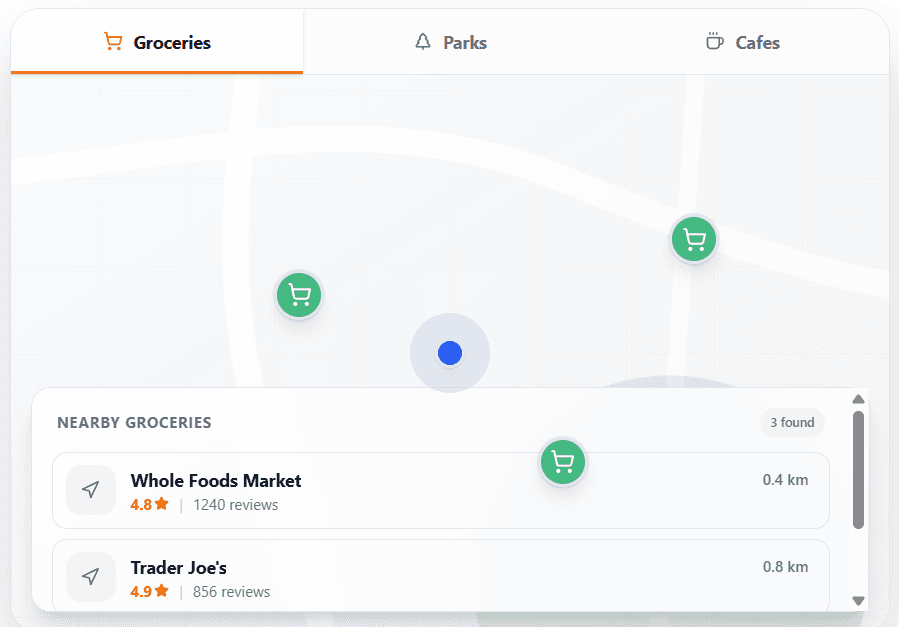
Every individual listing comes with a dedicated Location Expert AI. Powered by Google Maps and Gemini, it uses the property address to answer hyper-local questions with surgical precision. Buyers can ask "Where are the nearest Asian restaurants?", "How far is the gym?", or about local schools, getting accurate, real-world data instantly.
3. Lead AI Chatbot (Your Digital Twin)
Located on your Master Link-in-Bio, this chatbot acts as your digital twin. You can configure it with your own knowledge base (PDFs, text files) to represent your brand 24/7. It greets visitors, collects lead requirements automatically, and proactively recommends listings from your entire portfolio that match their needs.

4. AI Leads Dashboard
Stop guessing who is visiting your links. Your AI Leads Page gives you a real-time view of every lead captured by your Link-in-Bio chatbot. View their email, property requirements, and the full conversation history so you can step in when they're ready to talk.


5. Neighborhood & Lifestyle Intelligence
Our platform leverages Google's Gemini AI combined with Google Maps data to create rich, location-aware listing descriptions, automatic commute analysis, and interactive lifestyle maps for every listing.
Instant Neighborhood Analysis:
- ✓Commute Analysis: Instant drive vs. transit times to major work hubs.
- ✓Lifestyle Maps: Auto-populated maps with nearby grocery stores, parks, and schools.
- ✓AI Descriptions: Compelling narratives with precise walking distances to local cafes and gyms.
Start Now
Ready to Upgrade Your Real Estate Business?
Join thousands of agents who are saving time and closing more deals with RealtyChat's AI-powered tools and beautiful link-in-bio listings.
Subscribe to our newsletter
Get the latest real estate market analysis and trends delivered straight to your inbox.